

If you’ve moved to Delhi NCR from another city, you probably noticed your skin changed within a few weeks. If you’ve lived here for years, you may have stopped noticing — and that’s the more clinically concerning situation, because the skin adapts to chronic stress by altering its behaviour in ways that become normalised. The inflammation becomes baseline. The dullness becomes ‘just how my skin is.’ The barrier compromise becomes the new normal.
Delhi’s environment does specific, documented damage to skin through specific mechanisms. A generic skincare routine built for ‘all skin types’ will underperform here regardless of how well chosen the products are. Here’s what’s actually happening — and what an appropriate response looks like.
What Delhi’s Environment Does to Skin — The Physiology
The skin’s outermost functional layer is the stratum corneum — a structure of overlapping dead skin cells (corneocytes) held together by a lipid matrix of ceramides, cholesterol, and fatty acids. This is what we call the skin barrier. Its functions are: controlling transepidermal water loss (the rate at which moisture escapes from the skin into the air), blocking environmental pollutants and pathogens from penetrating to living skin layers, and regulating the skin’s inflammatory response.
In Delhi NCR, this barrier is under sustained, multi-directional stress:
PM2.5 and PM10 particulate matter
Delhi’s air quality regularly reaches clinically hazardous levels, particularly between October and January. PM2.5 particles are fine enough to physically penetrate the stratum corneum. Clinical research has demonstrated that prolonged PM2.5 exposure disrupts the skin microbiome (the community of beneficial bacteria that support barrier function), accelerates pigmentation responses, and increases inflammatory cytokine production in the skin. Over time, the barrier’s moisture-retention capacity measurably decreases.
Thermal cycling — extreme temperature shifts
The movement between 45 degree summer heat and air-conditioned interiors, or between 5 degree winter cold and heated office environments, forces the skin through rapid thermal cycling that the barrier lipids are not designed to sustain. The ceramides and fatty acids that form the barrier’s structural mortar are disrupted by repeated temperature changes. The result is increased transepidermal water loss and a surface that becomes progressively more reactive to products and environmental triggers.
Hard water mineral film
Delhi’s municipal water supply has a high mineral content. Regular washing with hard water deposits a calcium and magnesium film on the skin surface that disrupts the skin’s natural pH (which should be slightly acidic, around 4.5-5.5) and physically blocks topical skincare from penetrating the skin properly. You may be applying the right products in the right order, and getting a fraction of the benefit because they’re working on a mineral layer rather than actual skin.
| Varun Thakur, Co-founder, Bellance Salon: “At our Faridabad studio, the most common presentation is a client who has a good skincare routine but whose skin is not responding to it. If you are comparing options for the best salon in faridabad for professional skin treatments, it is important to consider the consultation process and the treatment approach. The routine isn’t wrong. The products aren’t wrong. But there are two or three environmental layers sitting between the products and the skin — pollution biofilm, mineral deposit, and a compromised barrier — that mean the routine is essentially working against a wall. Professional treatment removes the wall. Then the routine starts working the way it’s supposed to.” |
What Barrier Damage Actually Looks Like
A compromised skin barrier has a set of characteristic presentations: skin that feels tight and uncomfortable after cleansing rather than just clean; persistent mild redness without a specific cause; sensitivity to products that previously worked fine; breakouts in unusual locations outside the typical T-zone; and a consistently dull, flat appearance that doesn’t respond to hydration.
The error most people make when they identify these signs is to add more products to address each individual symptom. The correct response is the opposite: strip back to the simplest possible routine and add professional support. Layering more actives on a compromised barrier is like trying to repair a damaged wall by painting it different colours.
The Delhi-Adapted Skincare Protocol
Morning — protection and reinforcement
A pH-balanced gel or cream cleanser (not foaming — the surfactants are too stripping for barrier-compromised skin). Niacinamide serum at 5-10% to address pollution-induced pigmentation and support barrier ceramide production. A ceramide-containing moisturiser. SPF 50 broad spectrum — this is not negotiable in Delhi’s UV environment and is the single highest-impact anti-ageing and anti-pigmentation intervention available at zero additional cost.
Evening — thorough removal and repair
Double cleanse on high-AQI days: oil cleanser first to dissolve the day’s pollution biofilm, then a gentle water-based cleanser to remove the oil. Peptide serum to support structural collagen synthesis. A richer barrier-repair moisturiser containing ceramides, cholesterol, and fatty acids — all three, in appropriate ratio, not just ceramides alone.
What to stop doing in Delhi’s environment
High-frequency acid exfoliation. Using AHAs or BHAs more than twice a week on skin that’s already compromised by pollution stress is counterproductive. It removes the surface layer the barrier is trying to rebuild. Use acids sparingly — once or twice weekly maximum.
Alcohol-dominated toners and astringents. These strip natural oils and worsen transepidermal water loss — the opposite of what Delhi skin needs.
Skipping SPF on overcast winter days. UV radiation penetrates cloud cover and is present year-round. Delhi’s winter haze is not UV protection.
What Professional Treatment Adds
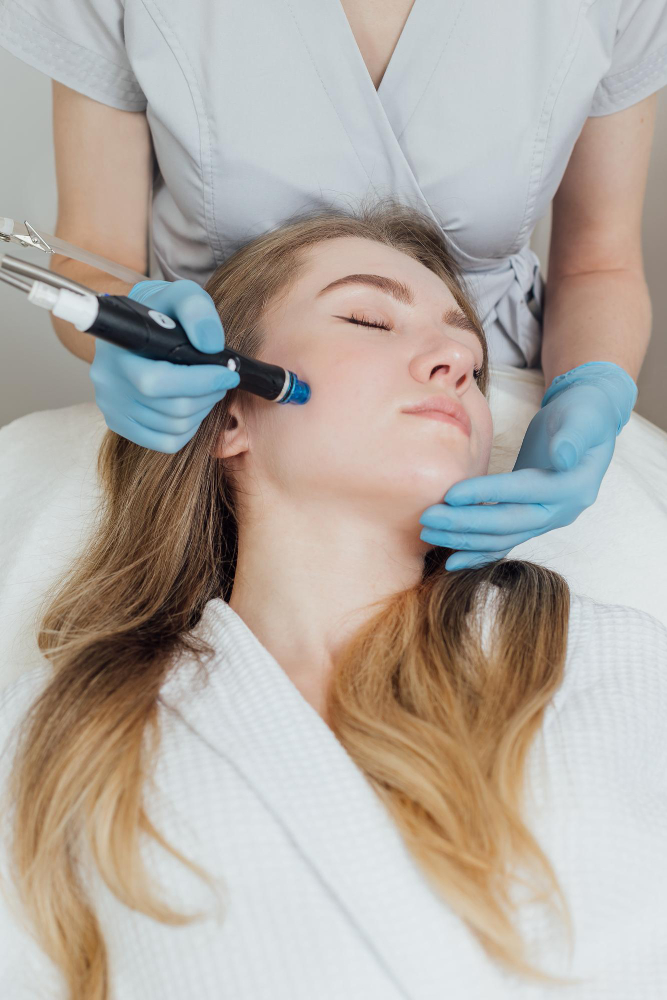
A monthly professional treatment at Bellance Salon Faridabad, a beauty salon in faridabad — specifically one focused on barrier repair, pollution removal, and targeted hydration — does what home skincare cannot: physically removes the congestion and pollution layer that sits between your routine and your skin, delivers active ingredients at depth that topical serums can’t reach, and combines modalities (exfoliation, infusion, LED therapy) that cannot be replicated in a home setting. The professional treatment repairs; the home routine maintains the repair.
| Frequently Asked Questions |
| Q: How do I know if my skin barrier is compromised? A: Three or more of: tightness after cleansing, persistent redness without cause, sensitivity to previously tolerated products, simultaneous oiliness and dehydration (overproducing sebum to compensate for barrier loss), and consistent dullness that doesn’t respond to hydration. If this describes your skin, the barrier needs attention before anything else. |
| Q: Will my barrier repair itself without professional treatment? A: Mild barrier damage repairs with appropriate product choices and lifestyle adjustments over 4-8 weeks. Moderate to significant damage — particularly from years of pollution exposure — repairs faster and more completely with professional intervention. Professional treatment doesn’t replace home care; it accelerates what home care alone cannot achieve on a useful timeline. |
| Q: What are the most important ingredients for barrier repair? A: The evidence base points to ceramides, cholesterol, and free fatty acids used in combination (they work synergistically, not independently), niacinamide, panthenol (B5), and hyaluronic acid for surface hydration support. Products that combine the first three in a ratio approximating the skin’s natural lipid composition are most effective. |
| Q: Does SPF really matter in Delhi winters? A: Yes, unambiguously. UV-A radiation — the wavelength responsible for pigmentation and collagen degradation — is present at consistent levels year-round regardless of temperature, cloud cover, or haze. SPF 50 daily, every day of the year, is the correct answer. |
| Q: Can I book a skin barrier treatment at Bellance Faridabad? A: Yes. At Bellance Salon Sector 21C, a professional salon in faridabad, we offer skin consultations where your skin therapist assesses your barrier’s current condition and recommends a treatment protocol. Book at bellancesalon.com/booking/ or call +91-98-1039-0117. |