

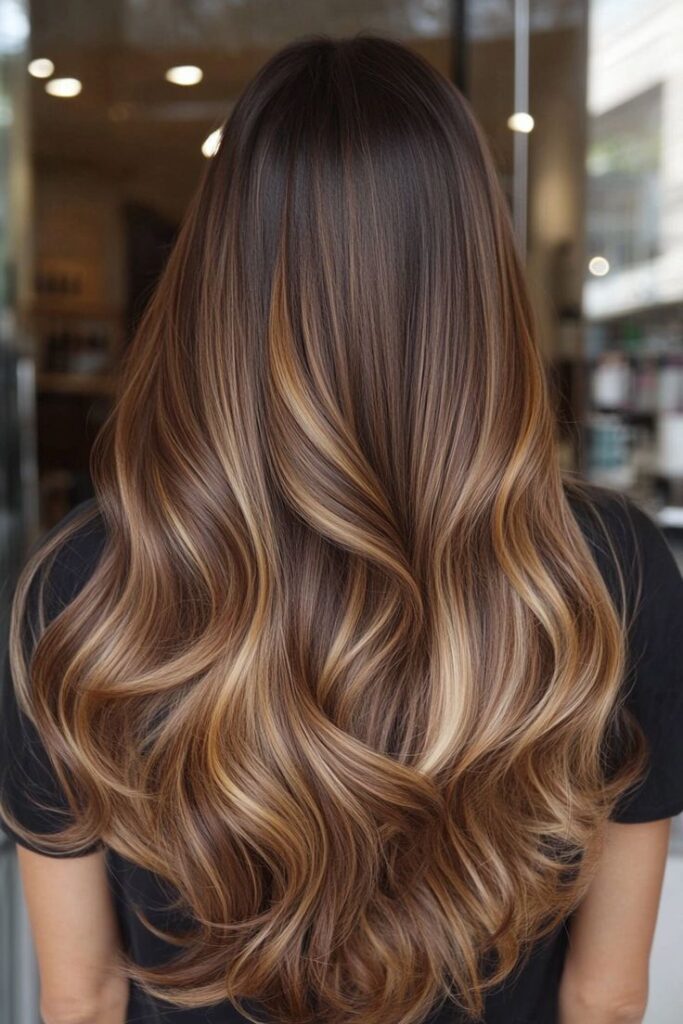
If you’ve spent any time on Instagram lately, you’ve seen it. That airy, layered, effortlessly undone haircut that seems to float rather than hang — the butterfly cut. The butterfly cut Bangalore trend has been building since late 2025 and is now one of the three most requested styles in our studios. It’s been taking over Bangalore’s salons for good reason. But here’s the part nobody tells you: not every butterfly cut works the same way on Indian hair, and Bangalore’s humidity is a variable most stylists forget to account for when they’re recreating what they saw on a social media post from London or New York.
Let me give you the full, unedited picture.
What Exactly Is a Butterfly Cut?
The butterfly cut is a layered haircut defined by two distinct sections — shorter layers at the crown that add lift and volume, and longer layers underneath that preserve length and movement. The visual effect, when the hair is in motion, resembles butterfly wings opening — hence the name. Think of it as a shag cut that’s been refined: the rawness of the shag, but with more considered weight distribution.
What distinguishes it from a generic layered cut is deliberate mass management. Your stylist removes weight from the mid-section while keeping density at the tips, which creates bounce and dimensional movement that a blunt cut simply cannot achieve. The result: you keep your length, but the hair behaves as though it’s shorter and more alive.
Why It’s Particularly Popular in Bangalore Right Now
Bangalore’s climate sits in a useful middle ground — not as aggressively humid as Chennai or Mumbai, but not the dry extremes of Delhi’s winters either. The city’s relatively temperate, moderate-humidity weather is actually ideal for this cut, because the butterfly cut relies on natural movement and texture activation. In an environment that’s too dry, layered cuts can look flat; in an environment that’s too humid, they can expand unpredictably. Bangalore’s climate hits a sweet spot.
There’s also a cultural-professional dimension specific to Bangalore. The city’s tech-forward, internationally exposed workforce wants hair that works across contexts — a Monday morning all-hands meeting and a Friday evening at a rooftop bar. The butterfly cut, done correctly, handles both without requiring a styling routine between them. That low-maintenance quality is particularly valued by clients at our Whitefield studio, where many come in between work commitments with minimal time to spare for styling.
| Bharat Singh, Technical Director, Bellance Salon: “In both our Whitefield and Indiranagar studios, the butterfly cut has been one of the three most requested styles consistently since late 2025. What I’ve noticed specifically about Bangalore clients is that they want it to work when air-dried — not just when blow-dried in the salon. Building a cut that behaves well without heat is a different technical challenge from building one that looks good under a dryer. We approach them differently.” |
Face Shapes — The Honest Assessment
The butterfly cut is frequently described as universally flattering. That’s an oversimplification that does a disservice to people who might not actually suit it in its standard form. Here’s a more useful breakdown:
Oval face shapes — yes, straightforwardly.
Most cut configurations work for oval faces, and the butterfly is no exception. The layers will frame without creating visual conflict with the face shape.
Round face shapes — yes, with specific modifications.
The critical adjustment is keeping the crown layers longer to avoid widening the visual field at the cheeks. A tight, short butterfly crown on a round face reads as wider. Ask your stylist to start the layers lower and concentrate the lift at the very top of the crown rather than spreading it outward.
Square face shapes — yes, particularly with texture.
The soft layering of a butterfly cut is excellent at diffusing angular jawlines. The best results come when the layers are textured and undone-looking rather than precise and blunt. Curtain bangs alongside the butterfly cut are a particularly effective combination for square faces.
Heart face shapes — proceed carefully.
An accentuated crown can widen a forehead that’s already the widest point of a heart face. A slightly heavier fringe or side-swept front pieces help balance the proportions. Discuss specifically with your stylist how the crown volume should sit.
Long face shapes — with consideration.
Adding crown volume can elongate a long face further. For long face shapes, the layering should distribute more toward the sides than the very top, and the fringe length should be considered carefully.
Indian Hair Texture — What the Cut Needs from Your Specific Hair
This is where most online advice fails Indian readers, because the butterfly cut’s viral moment happened largely on Western hair, which differs meaningfully from most South Asian and Indian hair in density, diameter, and natural texture.
Indian hair tends to be thicker, denser, and more inherently heavy than the hair types on whom this cut is typically demonstrated. This isn’t a disadvantage — it just requires a different technical approach. Specifically, the underlayers need to be point-cut (scissors angled into the ends diagonally) rather than blunt-cut, to remove bulk without sacrificing the appearance of fullness. If your stylist only blunt-cuts, your butterfly will sit heavy and the wings won’t open properly.
For fine to medium Indian hair, the cut performs almost exactly as seen online. For thick, coarse hair, it requires the weight management technique described above. For wavy and naturally textured Indian hair, the butterfly cut is arguably at its very best — the natural wave activates within the layered structure and creates effortless dimension that straight hair works harder to achieve.
What to Expect at Bellance Salon in Bangalore
At Bellance hair salon whitefield and our hair salon indiranagar location, every butterfly cut appointment begins with what we call a face-mapping and texture read — a few minutes before any cutting begins where your stylist looks at your natural growth patterns, assesses where your hair carries weight, maps your face shape, and — critically — asks how you actually style your hair on an ordinary day, not a special occasion.
This conversation matters because a butterfly cut that looks extraordinary in a salon blowout must also work when you’ve air-dried your hair in Bangalore’s morning humidity and walked to the office. We design for both. The appointment also typically includes a brief scalp assessment — because a healthy scalp is the foundation of how any layered cut performs and grows out. If your scalp shows signs of buildup or imbalance, we’ll recommend a scalp treatment before or alongside your cut. Many clients also pair the butterfly cut with a balayage colour service at the same or a subsequent visit — the layered structure of the butterfly cut is one of the most ideal canvases for balayage, as the colour reflects differently through each weight section.
In 2026, the natural colour companion for the butterfly cut is bronde — the brown-blonde blend that L’Oreal Professionnel has identified as the defining hair colour trend of the year. The butterfly cut’s layered architecture is precisely what makes bronde colour come alive: lighter caramel and honey tones placed in the crown layers create brightness around the face, while the deeper warm brown sits in the underlayers for depth and richness. The result is a multi-dimensional, seamlessly blended look that is impossible to achieve on flat, single-length hair. If you are planning both a butterfly cut and bronde colour at Bellance, book them together in a single appointment — cut first, then colour — and ask your stylist to map the colour placement to your specific layer structure.
The appointment runs between 45 minutes and 1.5 hours depending on length and density. For hair with any frizz tendency, we recommend pairing the cut with a light gloss treatment or express keratin — the butterfly cut’s dimensional quality relies on each layer falling cleanly and separately, and a gloss treatment maintains that separation between visits.
| Frequently Asked Questions |
| Q: Is the butterfly cut high maintenance between salon visits? A: No — it’s designed to look good with minimal daily styling. Once your hair adjusts to the new weight distribution, usually within two to three weeks, it will air-dry into a respectable shape without intervention. Trims every 8-10 weeks maintain the shape. Longer than 12 weeks and the layers begin to merge, losing the distinctive silhouette. |
| Q: Can I get a butterfly cut if my hair has been chemically straightened? A: Yes, but inform your stylist upfront. Chemically straightened hair has different elasticity and weight-distribution properties from natural hair. At Bellance, we routinely cut butterfly layers into treated hair — it requires an adjusted technique but the result is fully achievable. |
| Q: Does the butterfly cut work on short hair? A: The classic butterfly works best from shoulder length and longer. Below the shoulder, the two distinct sections — crown layers and underlayers — have enough canvas to express the silhouette properly. For shorter hair, ask for a modified version that creates a similar layering effect without claiming to be a full butterfly cut. |
| Q: Should I get a trim or the full cut if I’ve never had a butterfly cut before? A: A full consultation and cut, not a trim. The butterfly requires deliberate structural decisions about where the layers sit, where weight is removed, and how the sections relate to each other. A trim addresses length, not architecture. Book a cut appointment and discuss the look with your stylist beforehand. |
| Q: How do I book a butterfly cut at Bellance Salon in Bangalore? A: Book online at bellancesalon.com/booking/ or call +91-95-4059-4059. We’re in Whitefield (Sumadhura Capitol Towers) and offer haircut in indiranagar at 2964, 12th Main, HAL 2nd Stage. |